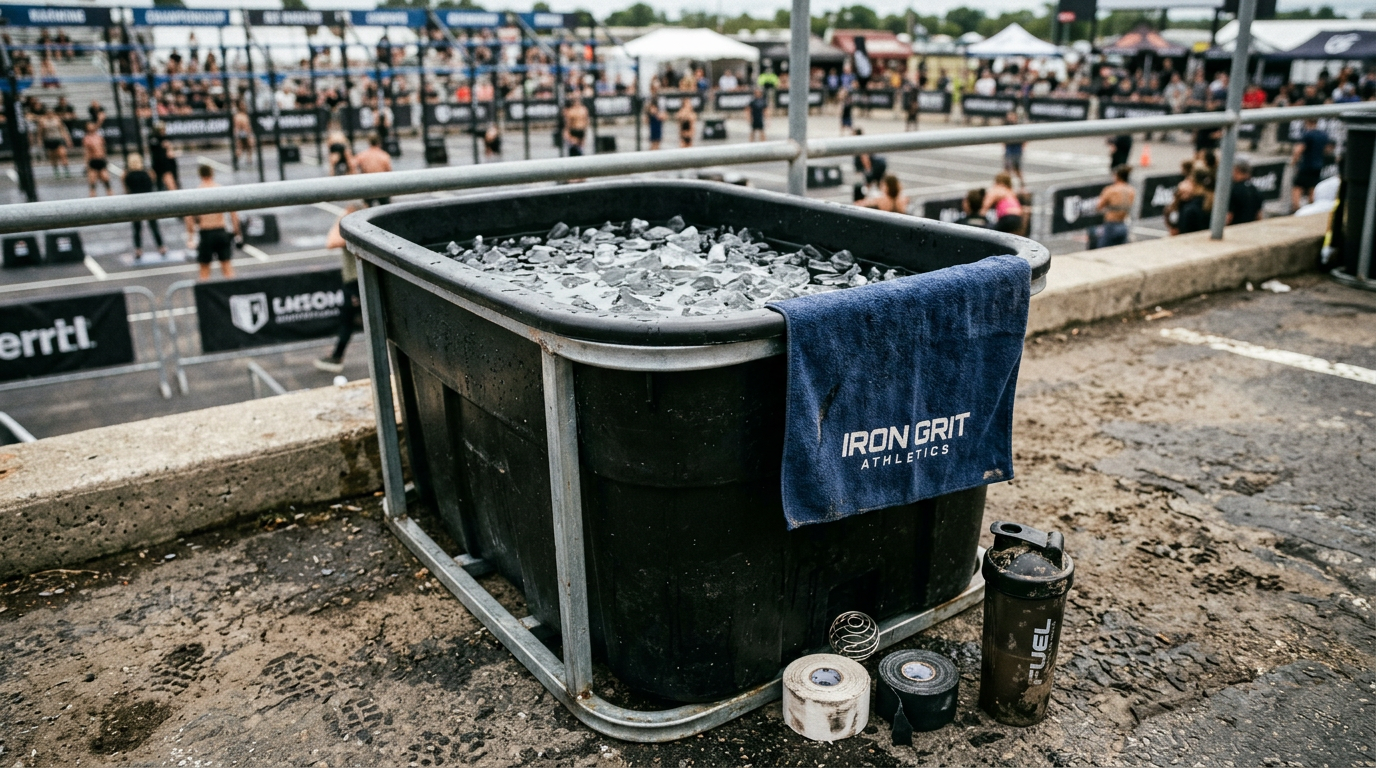
Day three of the WSM 2025 finals in Sacramento. The field has already been through qualifying rounds, heats, and two days of the highest-stakes strength competition on earth. Muscles are inflamed, glycogen is depleted, the nervous system is running on competitive adrenaline and the memory of what the events feel like when everything goes wrong. In this environment — the one captured in Nick Best's Day 3 Finals footage from this week's episode of The Best Experience — recovery between events isn't a wellness bonus. It's the entire margin between finishing and winning.
Nick Best has nine WSM appearances across his career and two Masters world titles. He did not accumulate those results despite being older than most of his competitors — he accumulated them partly because he understood earlier than most that the athlete who recovers fastest between events wins multi-day competitions. Here's how he approaches the recovery problem.
Important note: The supplementation approaches discussed below — particularly peptide protocols through Invigor Medical — should be reviewed with a licensed physician before starting. Individual responses vary, and what works for a world-class professional athlete operating under medical supervision may not be appropriate for every person.
Key Takeaways
- Between events at a multi-day competition, recovery management directly determines performance in the next event — it is not optional.
- Ice baths (Nick uses The Ice Pod) reduce acute inflammation, accelerate tissue recovery, and blunt delayed onset muscle soreness between competition days.
- Nick partners with Invigor Medical for peptide-based longevity support — use code NickBest10 for a discount. Consult your doctor before starting any peptide protocol.
- Creatine monohydrate remains the single most evidence-backed supplement for strength athletes — Nick uses it consistently, not just in peaking phases.
- Electrolyte replenishment (sodium, potassium, magnesium) during and after events prevents cramping and maintains neuromuscular function under fatigue.
- Supplements extend the food strategy — they don't replace it. Nick's recovery foundation is protein-dense whole food meals after each competition day.
Cold Water Immersion: The Ice Pod Protocol
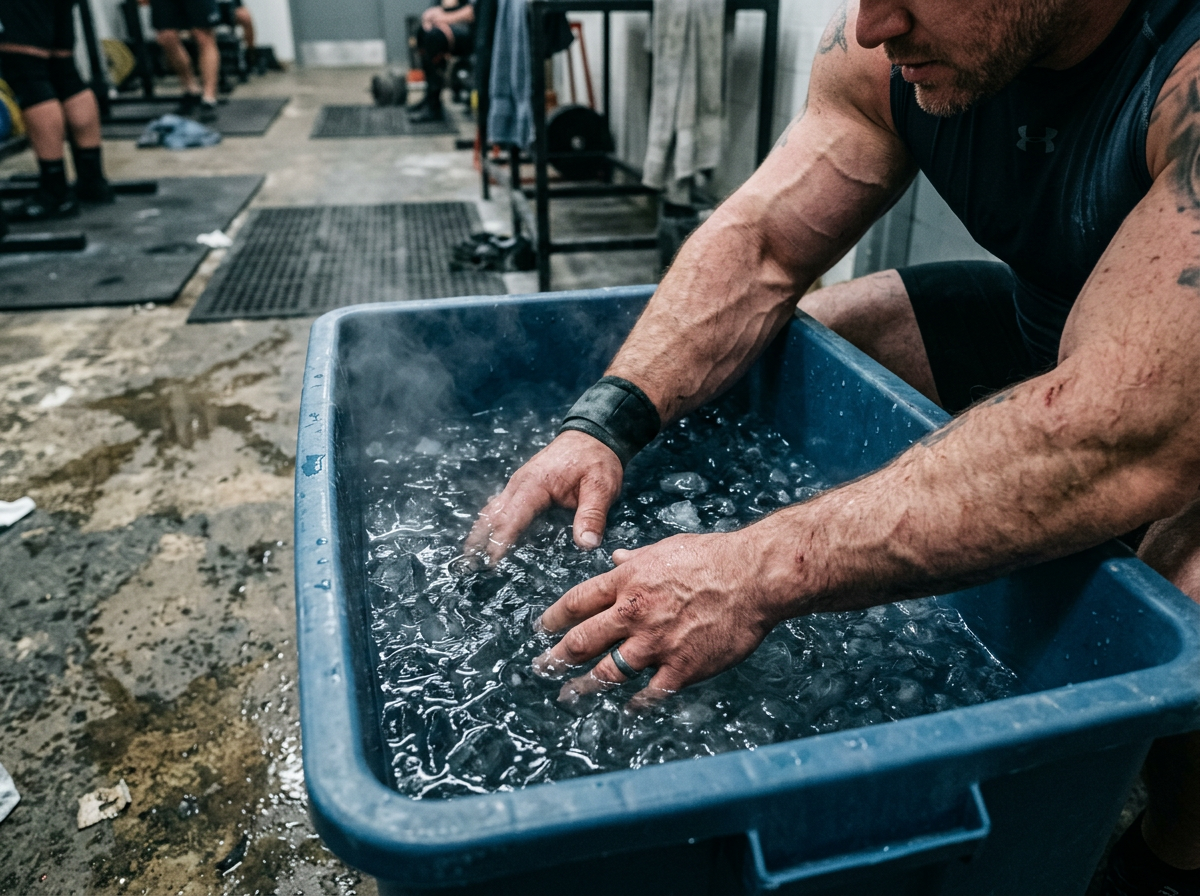
Cold water immersion has been a fixture in professional sports recovery for decades, but the data on when to use it and how cold matters more than most athletes realize. Nick Best uses The Ice Pod — a portable, insulated cold plunge tub that can be deployed in a hotel room or competition venue — to get systematic cold exposure between competition days at events like WSM.
The mechanism is straightforward: cold water immersion constricts peripheral blood vessels, which reduces the inflammatory cytokine response to muscle damage and clears metabolic waste products from worked tissues. For an athlete who has just executed a Hercules Hold and a Carry and Hoist in a single competition day, that inflammatory response is significant. Left unmanaged, it compounds into next-day soreness that slows event times and reduces force production. The ice bath interrupts that cycle.
Nick's protocol leans toward 10 to 15 minutes at water temperatures around 50°F (10°C). Colder isn't necessarily better — water below 50°F starts to introduce other physiological stressors that can interfere with sleep quality if used too late in the evening. Timing matters: a cold soak within an hour of finishing the competition day's events, then a warm shower before sleep, is a recovery sequence backed by sports science and practical competition experience.
Sleep and Soft Tissue Work
Cold exposure gets the headlines, but sleep is the actual recovery modality. Best has spoken consistently about prioritizing sleep even in the chaotic environment of a multi-day competition — blackout conditions, no phone in the hour before bed, and sufficient caloric intake in the evening so that blood glucose doesn't drop during sleep and interrupt deep sleep cycles. A 315-pound athlete in competitive condition who undersleeps for two consecutive nights shows measurable declines in grip strength, reaction time, and neuromuscular coordination. None of those are things you want degraded when you're about to load Atlas Stones.
Soft tissue work — foam rolling, massage gun work on the quads, hamstrings, and thoracic spine, and targeted manual therapy when access allows — rounds out the between-event recovery protocol. These are not spa treatments. They're mechanical interventions that break up adhesions in fatigued tissue, restore range of motion, and keep the joints moving freely through the patterns required in the next event.
Peptides, Creatine, and the Supplement Stack
Nick's partnership with Invigor Medical reflects his longer-term approach to athletic longevity — using peptide-based protocols to support recovery, tissue repair, and hormonal health across a career that spans decades. Invigor Medical works through licensed physicians and provides telehealth consultations before prescribing any protocol. That's the right model: this is not a supplement you buy off a shelf. Use code NickBest10 for a discount on Invigor Medical services, and speak with your doctor about whether any peptide protocol is appropriate for your situation.
Aside from Invigor Medical's work, Nick's daily supplement stack centers on a handful of well-supported compounds:
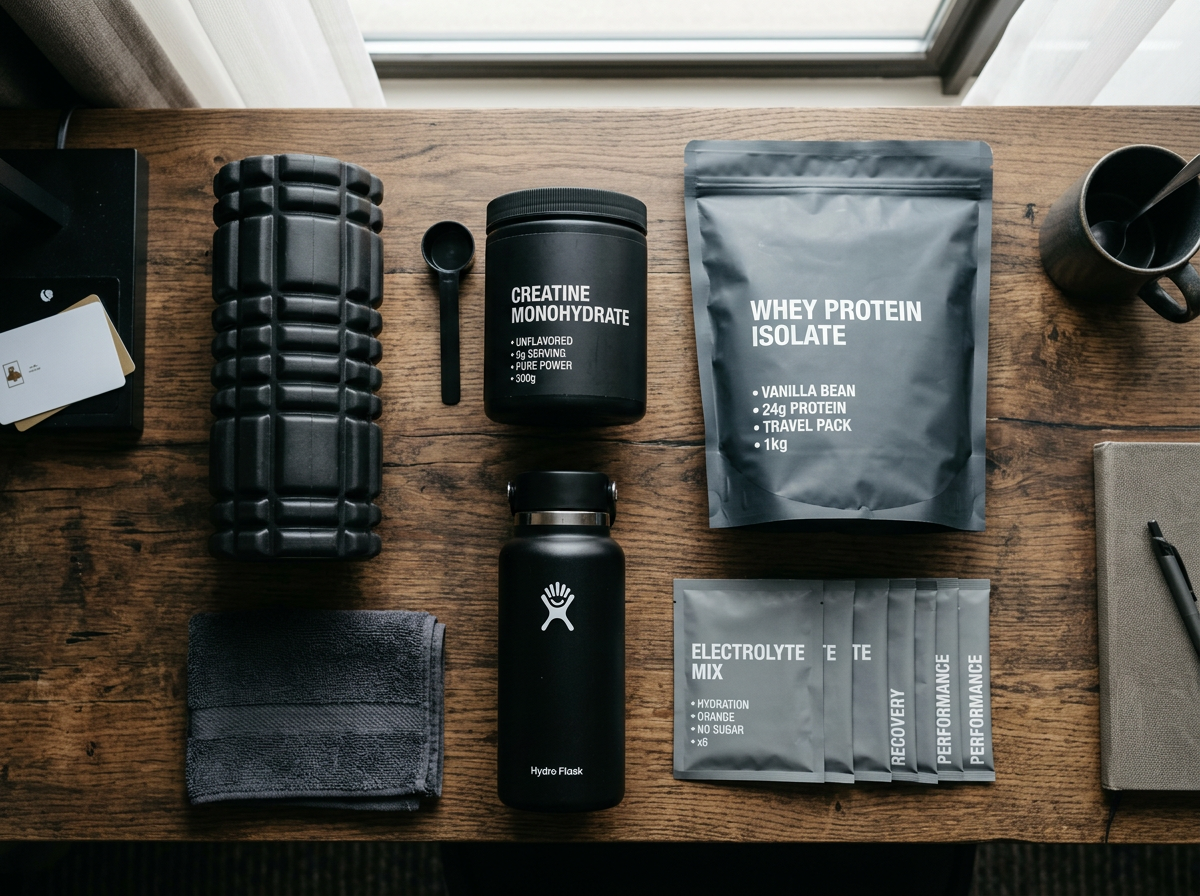
Creatine monohydrate is non-negotiable. The evidence base for creatine in strength athletes is broader and deeper than any other performance supplement by a wide margin. Five grams per day, taken consistently rather than cycled, maintains muscle creatine saturation and supports ATP regeneration in maximal-effort events. Nick has used it continuously — not loaded aggressively before competition, not cycled off in the off-season.
Electrolytes — specifically sodium, potassium, and magnesium — become critical during a multi-day competition in a warm-weather venue like Sacramento. Heavy exertion in heat produces sweat losses that strip these minerals faster than food alone can replace them. Cramping during the Atlas Stones is not a strength problem. It's a hydration and electrolyte problem. Nick supplements electrolytes aggressively during competition days and moderately during training.
Protein supplementation (whey, casein, or a blended protein) fills in the gaps when whole food isn't accessible. Competition venues are not known for convenient high-protein meal options, and between events is not the time to be hunting for a kitchen. A pre-mixed protein shake handles the immediate post-event amino acid window and keeps nitrogen balance positive until a real meal is accessible.
The full Day 3 footage from WSM 2025 — the fan interactions, the competition energy, the behind-the-scenes look at how Nick operates on a competition day — is the best visual companion to everything covered here. Watch how he moves between events. The recovery stack is invisible in the footage, but its effects are not.
Watch the Full Episode
Nick Best at WSM 2025 – Day 3 Finals Kick Off with Fans & Fun! — from The Best Experience podcast with Nick Best.
Watch on YouTubeFurther Reading
Get the Full Best Experience
Train with Nick. Hear every episode early. Join the Best Strong Patreon.
Join Patreon