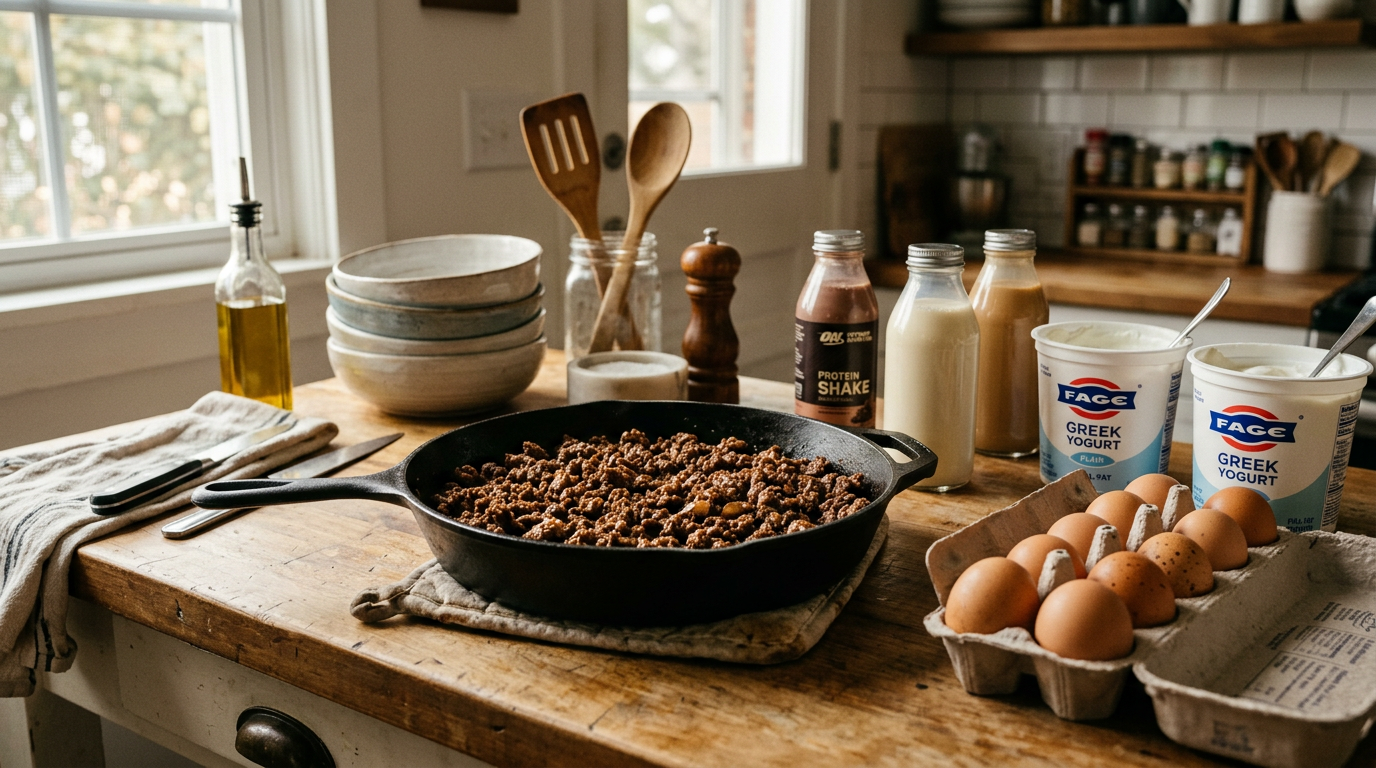
Six thousand to eight thousand calories per day. Five hundred grams of protein. Roughly $1,200 a month in groceries. Those are not exaggerated boasts from a supplement company's sponsored post — those are the documented fueling numbers behind Nick Best's competition career, the same career that produced two Masters World's Strongest Man titles and a world record in the 125 kg Farmer's Walk. When your sport requires moving maximum loads over time, repeatedly, across multi-day competitions, nutrition isn't a lifestyle choice. It's an engineering problem.
In a recent episode of The Best Experience, Nick and co-host Ben Bulman break down the Patreon launch, recap the Shaw Classic, and get into the personal routines that keep Nick operating at this level year after year. The nutrition topic came up organically — because it always does when people see what it actually takes.
Key Takeaways
- Nick consumes 6,000–8,000 calories per day during training — a number that must be earned through a structured eating schedule, not casual snacking.
- His daily protein target is approximately 500 grams, sourced primarily from whole foods: ground beef, eggs, chicken, fish, and dairy.
- He does not do extreme cuts before competition — dramatic weight drops compromise strength output and are counterproductive at his size.
- Competition-day fueling differs from training-day fueling: lighter, faster-digesting carbs between events, heavier whole food post-competition.
- Hydration and electrolytes are treated as seriously as macros — especially during multi-event days in warm-weather venues.
- His monthly food spend runs approximately $1,200 — a budget that reflects the reality of fueling a 315-pound strength athlete with real food.
The Math Behind 6,000 Calories
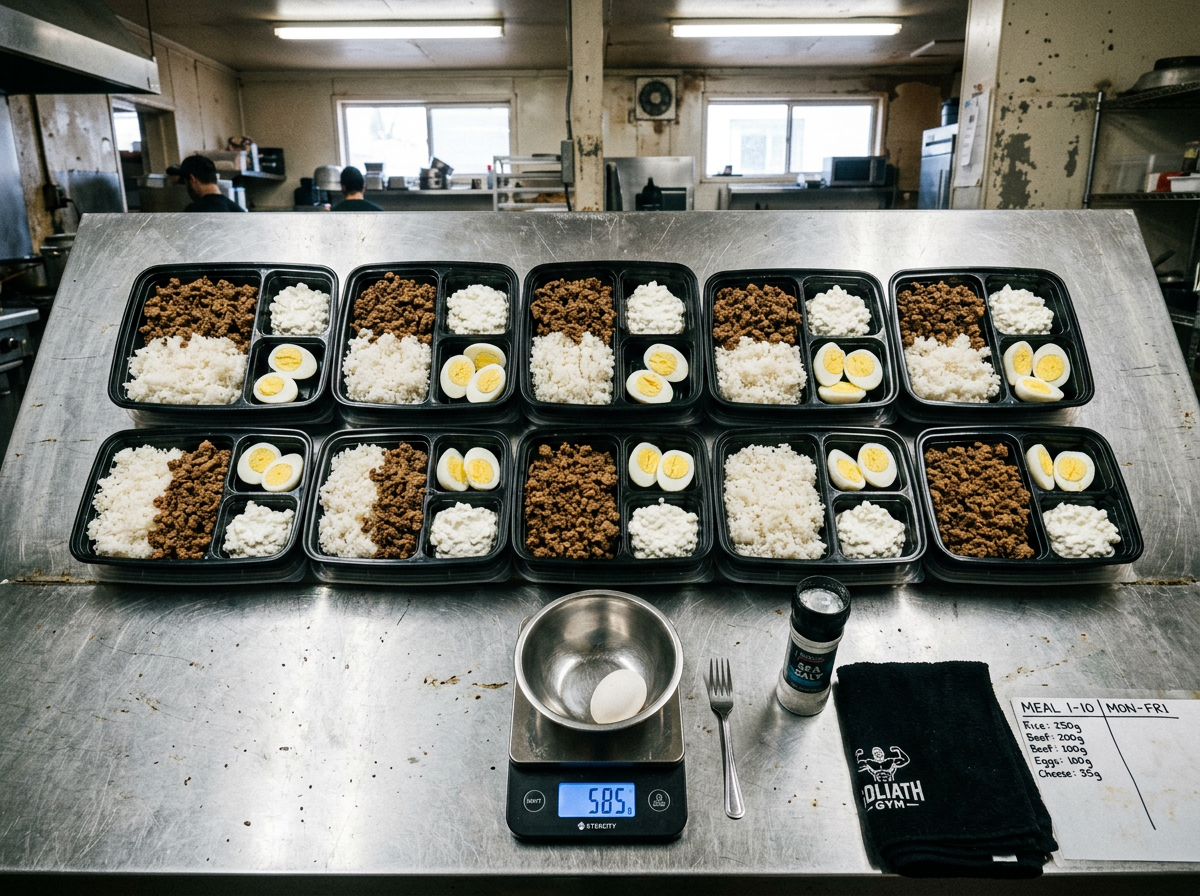
Most people eat 2,000 calories and think they're eating a lot. Nick Best eats three to four times that during a training block and still needs to be deliberate about hitting his numbers. At 6'2" and 315 pounds with the muscle mass required to compete at the World's Strongest Man level, basal metabolic rate alone is extraordinary. Add four training days per week of three-hour sessions moving multi-hundred-pound implements, and you're looking at a daily energy demand that most nutrition calculators can't even model accurately.
The practical consequence: eating six to eight times per day is not optional. It's a job. Best structures his meals around his training session — a substantial pre-training meal two to three hours before the session, intra-training nutrition to sustain blood glucose through the back half of a long lift, and a priority post-training meal within 30 to 60 minutes of finishing. The remaining meals fill in the gaps. Skipping one meal doesn't just leave him hungry — it puts him a thousand calories in the hole for the day, which shows up as weakness in the next session.
Protein First, Supplement Second
The 500-gram daily protein target sounds like it requires industrial quantities of protein powder. The reality is closer to the opposite. Best builds his protein intake around whole foods first: multiple pounds of ground beef, a dozen or more eggs, large cuts of chicken or fish, and generous amounts of dairy. Protein shakes and powders fill the gaps when whole food isn't practical — after a session, while traveling, between events at a competition. They're a tool, not a foundation.
Whole food protein sources carry micronutrients, saturated fats, and cholesterol that matter for hormone production in a heavy strength athlete. A diet built entirely on whey isolate and chicken breast misses this. Nick's preference for ground beef in particular reflects an understanding that fat-soluble vitamins and dietary cholesterol support testosterone and recovery in ways that lean protein alone cannot.
Competition Fueling Versus Training Fueling
One of the most practical distinctions Nick makes is the difference between how he eats on a training day versus a competition day. During a training week in Las Vegas, heavy whole-food meals are ideal — the recovery window is long, digestion isn't under pressure from adrenaline and competition nerves, and the gut can handle dense food without issue.
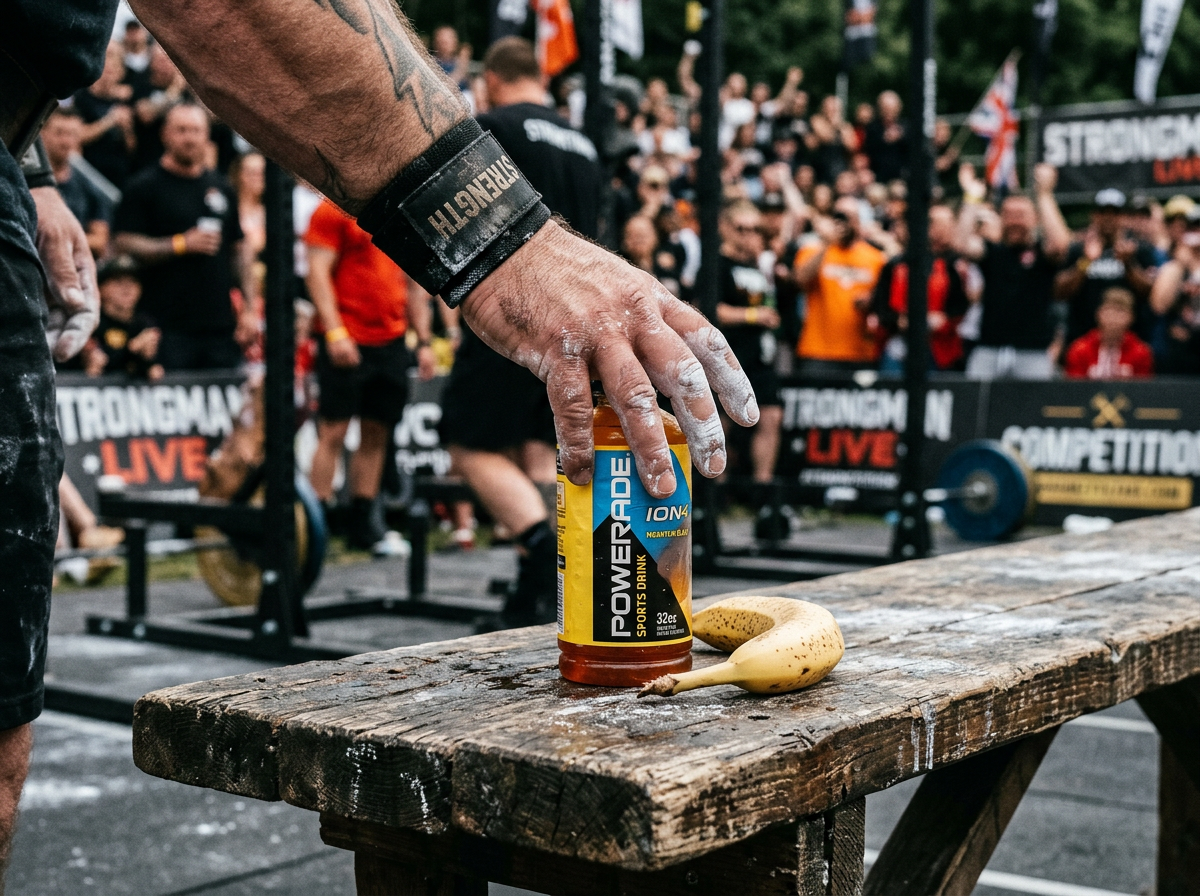
Competition day is different. During a multi-event strongman competition, athletes may have 30 to 90 minutes between events. Eating a pound of ground beef between the Hercules Hold and the Atlas Stones is a fast path to nausea. Best switches to fast-digesting carbohydrates between events — rice-based foods, fruit, sports drinks with electrolytes — to keep blood glucose up without drawing significant blood flow into the digestive system. Heavy protein meals come after the competition day wraps, when the body can actually use the amino acids for repair rather than just struggling to process them.
Why He Doesn't Cut Weight Before Competitions
One question that comes up repeatedly is whether Best ever diets down aggressively before competing. The short answer is no, and for good reason. At his size and with his event profile — farmer's walk, Atlas Stones, yoke, log press — bodyweight is an asset. More mass means more force application potential through the hips and legs in pressing and carrying events. Cutting 15 to 20 pounds of water and glycogen before a competition to hit a lower weight class sacrifices strength that was built over months of eating and training, and it cannot be recovered in the 24 hours before the first event.
This philosophy flies in the face of combat sports culture and even some powerlifting culture, where weight manipulation is standard practice. In open strongman, there are no weight classes at the elite level. Showing up lean at 280 pounds doesn't get you bonus points. Showing up strong at 315 pounds and moving a yoke faster than the next person does.
The Patreon launch and Shaw Classic recap in the episode this week are worth watching in full — they give context to what Nick's training and nutrition cycles look like in a real competitive calendar, not in the abstract. If you want the raw, unfiltered version of what it actually costs to fuel a world-record strongman career, this is the episode.
Watch the Full Episode
The Best Experience: Introducing Patreon, Shaw Classic Recap, and Personal Updates — from The Best Experience podcast with Nick Best.
Watch on YouTubeFurther Reading
Get the Full Best Experience
Train with Nick. Hear every episode early. Join the Best Strong Patreon.
Join Patreon