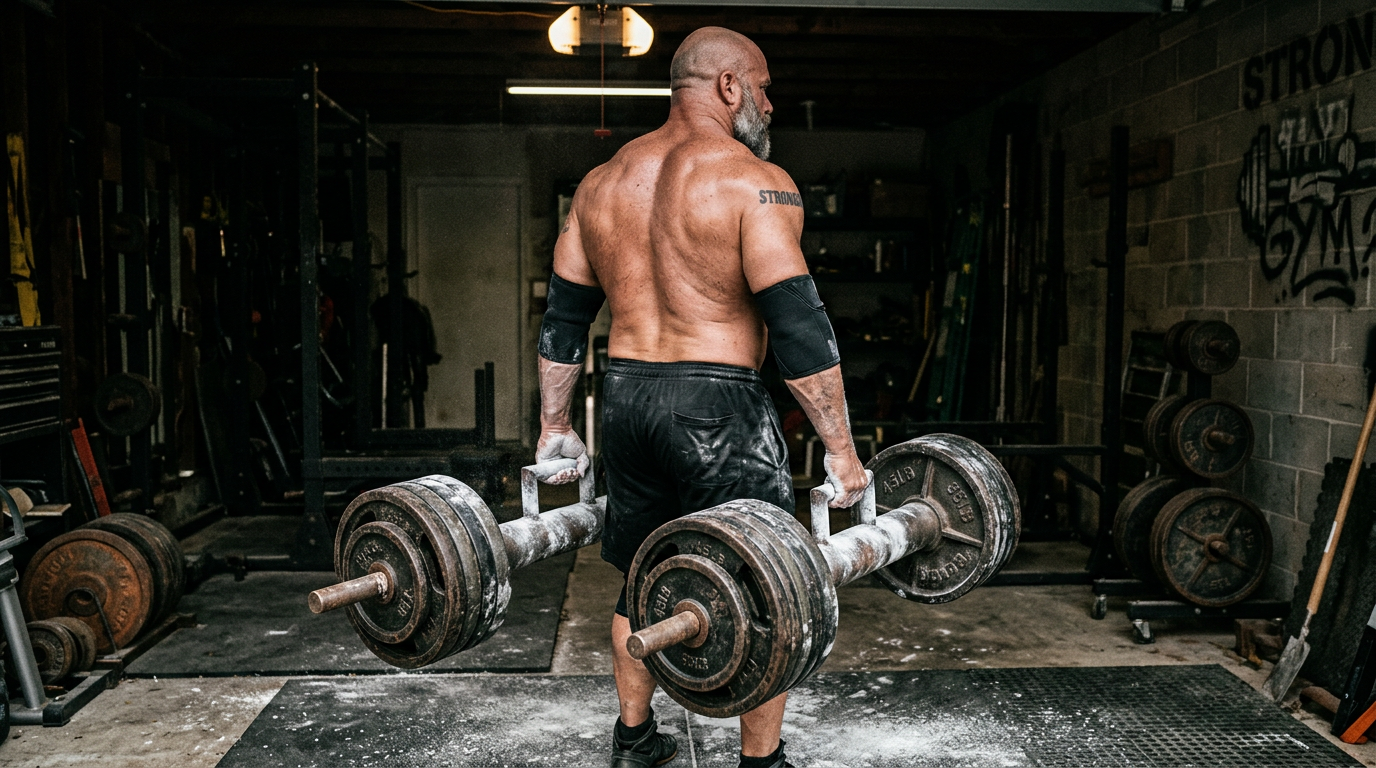
Nobody walks into a gym for 20-plus years, competes nine times at the World's Strongest Man, holds a world record in the 125 kg Farmer's Walk (47.3 seconds), and wins two Masters WSM titles without a training system that actually works. Nick Best isn't famous for being gifted. He's famous for still being dangerous at an age when most strength athletes have long retired. That distinction matters, because it means his programming choices aren't a shortcut — they're a survival strategy that happens to produce world-class output.
In this week's episode of The Best Experience, Nick and co-host Ben Bulman peel back the curtain on the principles behind that output. It's a conversation that goes further than sets and reps.
Key Takeaways
- Nick trains 4 days per week, roughly 3 hours per session — more than that is recovery debt, not extra gains.
- He prioritizes fewer work sets performed heavier rather than high-volume pump work — quality over quantity every time.
- Grip and core are the two weakest links in most athletes; Nick builds them into every session, not as accessories.
- Joint-friendly movement selection (trap bars, log press, axle) extends career longevity by decades.
- Progressive overload is non-negotiable — but Best defines "progress" as consistency over months, not PRs every week.
- His 47.3-second world record in the 125 kg Farmer's Walk is a direct product of this system — not genetics alone.
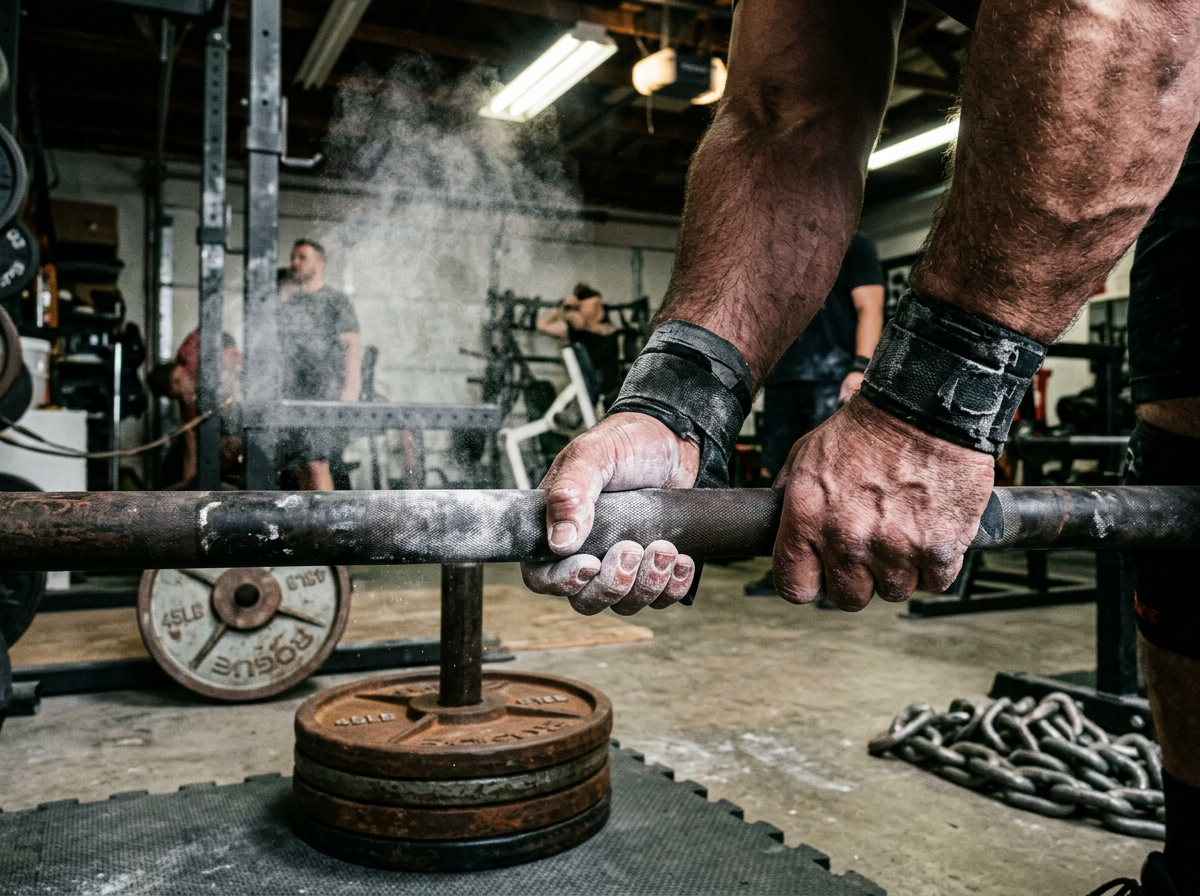
Four Days, Three Hours, Zero Junk Volume
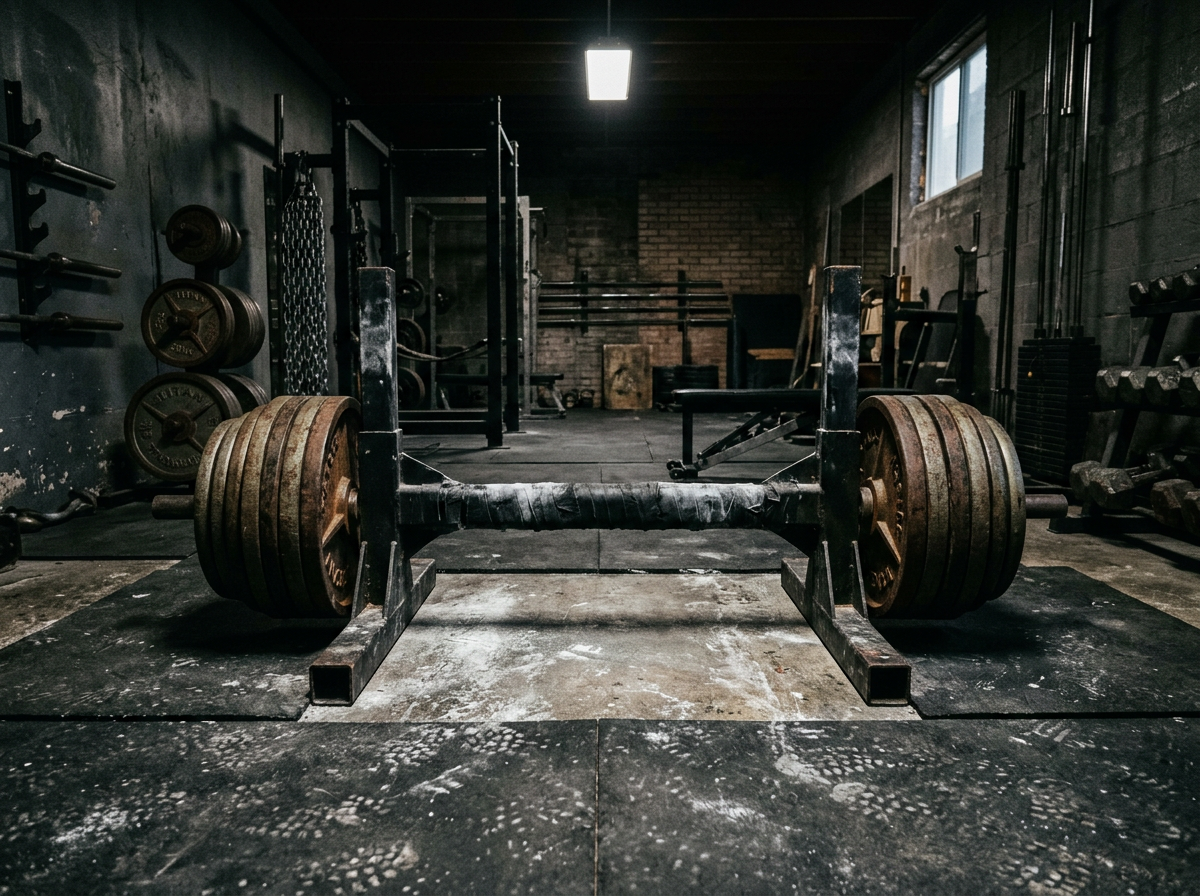
Nick Best trains four days a week. Each session runs around three hours inside his Las Vegas home gym — the Best Strong garage gym, an operation that looks less like a hobby setup and more like a small competition venue. Four days is not laziness. At 6'2" and north of 300 pounds in his competitive prime, the systemic recovery demand per session is enormous. Attempting to train six days a week at that loading would erode the joints, suppress testosterone, and flatten strength curves within weeks.
The three-hour sessions aren't padded with cardio warmups and Instagram filming breaks. They're built around compound movements performed at near-maximal loads with complete rest between sets. Nick's preference has always been fewer work sets — typically two to four — executed with precision and real weight rather than eight to twelve sets of moderate loads chasing fatigue. The logic is simple: the stimulus that drives adaptation in a trained 300-pound athlete is not the same stimulus that drives adaptation in a 180-pound beginner. By the time you've been competing at the pro level for a decade, your nervous system requires a significant mechanical signal to register a training effect. High reps with moderate weight don't deliver that signal.
Progressive Overload, Measured in Months
Best's version of progressive overload isn't what most gym-goers recognize. He's not hunting for a new max every session. Instead, he tracks performance over months — is the same weight moving faster? Is form staying locked under a heavier load? Is the farmer's walk implement feeling lighter at the same sprint speed? Progress in strongman doesn't always show up on a whiteboard in real time. Sometimes the adaptation is happening underneath the surface, and the athlete who chases a PR every Friday ends up grinding ligaments rather than building strength.
This long-game mentality explains in part why Best is still setting world records when other athletes his age are managing injuries or coaching from the sidelines. The 47.3-second farmer's walk record didn't come from a single heroic training cycle. It came from years of deliberate, progressive loading in an event that demands grip endurance, hip extension power, and the mental fortitude to accelerate under a load that would shut most competitors down.
Grip and Core: The Two Bottlenecks
Ask Nick Best to identify the most underbuilt physical qualities in strength athletes and you'll hear the same two answers: grip and core. Not chest. Not quads. Not even posterior chain, though he cares deeply about that too.
Grip is the limiting factor in every event that requires holding an implement. Farmer's walk, deadlift, yoke transfer, Atlas Stones — all of them are constrained by what the hands can sustain. Nick doesn't treat grip as a finisher or an accessory lift he might get to if time allows. Gripping work is woven into primary movements throughout the session. He uses thick bars, farmer's implements, and axle deadlifts specifically because they load the grip simultaneously with the rest of the kinetic chain. The idea is to never let grip be the reason for failing a heavy attempt.
Core stability functions the same way. Best trains bracing and anti-rotation under load, not crunches. A 315-pound athlete moving a yoke at sprint speed is managing enormous rotational forces through the lumbar spine. The only way to keep that spine healthy across a decades-long career is to build the anterior and lateral core into every heavy session, not save it for a Friday ab circuit.
Movement Selection for Careers, Not Just Cycles
One of the more underrated aspects of Nick Best's programming philosophy is his deliberate selection of implements and movements that are joint-friendly. He gravitates toward trap bar deadlifts over conventional pulls when building baseline strength, toward log press over barbell strict press, and toward controlled eccentrics rather than slam-and-bounce repetitions. These aren't choices made because he's cautious or conservative. They're choices made because he's watched peers with extraordinary talent disappear from the sport due to avoidable injuries.
The History Channel's The Strongest Man in History put Nick on screen alongside Eddie Hall, Brian Shaw, and Robert Oberst in 2019. Watching those four men work through historical strength challenges, the thing that stands out about Best isn't raw size or a single bending lift — it's how he moves. Controlled, purposeful, never showing off range of motion he doesn't actually own. That movement quality is a direct consequence of programming choices made over two decades.
For anyone looking to build strength that lasts beyond a single competitive season, the lesson from Best's career is worth sitting with: the athlete who survives is the one who programs for the next ten years, not just the next ten weeks. The episode goes deep on exactly how that principle plays out in a real weekly training structure — and it's worth every minute.
Watch the Full Episode
Unlocking the Secrets of Strength with Nick Best! — from The Best Experience podcast with Nick Best.
Watch on YouTubeFurther Reading
Get the Full Best Experience
Train with Nick. Hear every episode early. Join the Best Strong Patreon.
Join Patreon