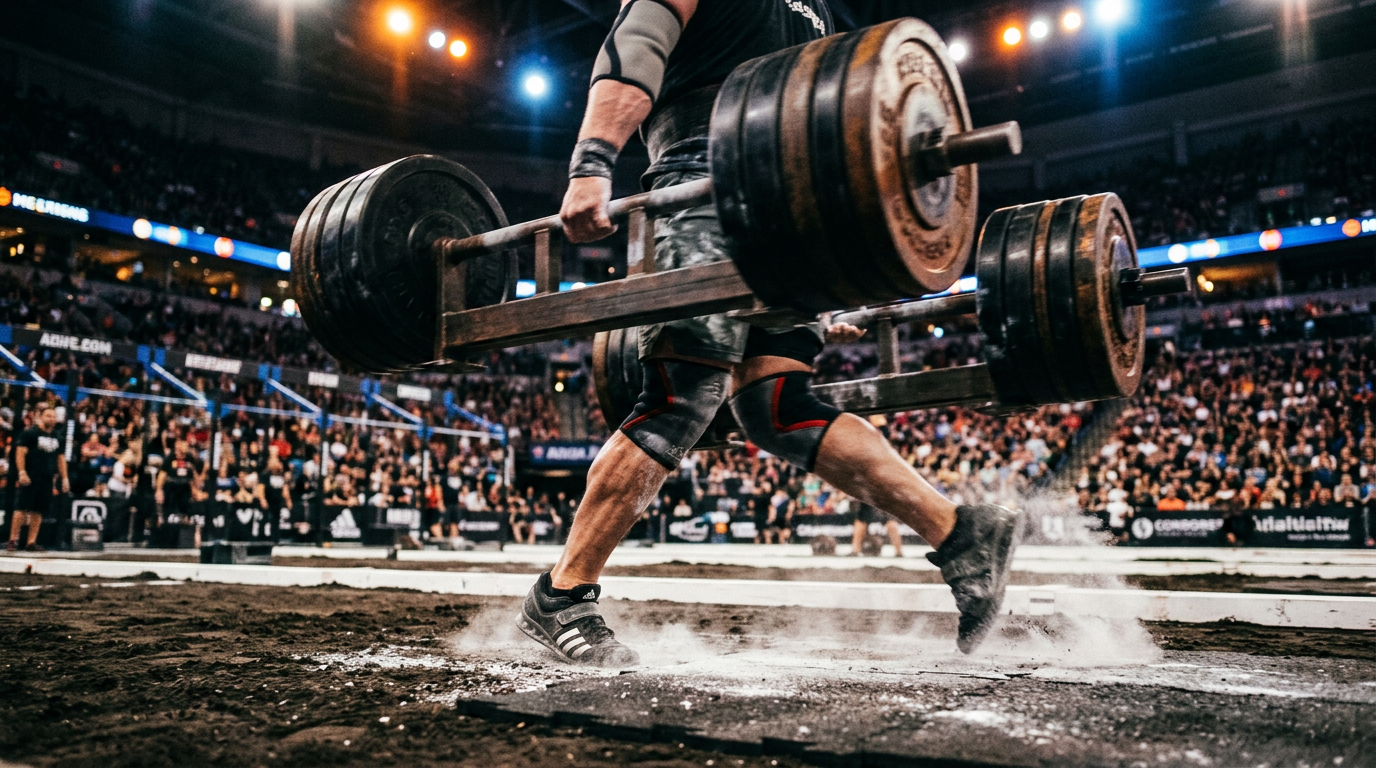
Rayno Nel won the 2025 World's Strongest Man by half a point. Half a point. In Sacramento, after five grueling events across two days of finals, a first-time WSM champion from South Africa edged out three-time winner Tom Stoltman and former champion Mitchell Hooper by a margin that would fit in a rounding error. That margin is the whole story of what peaking means in strongman: the difference between a world title and a near-miss is almost never the biggest deadlift or the most impressive log press. It's the athlete who is precisely right on the right day.
Nick Best has appeared at the World's Strongest Man nine times. He's a two-time Masters WSM champion and a man who has watched the peaking problem from every angle — as a competitor, as a training partner to elite athletes, and now as an analyst on The Best Experience podcast. In his WSM 2025 finals recap with co-host Ben Bulman, Nick unpacks what he saw in Sacramento and connects it to the broader principles that separate athletes who perform at worlds from athletes who survive worlds.
Key Takeaways
- WSM 2025 in Sacramento crowned South Africa's Rayno Nel champion by half a point — a reminder that peaking to a single day is the entire sport.
- Nick's peaking framework compresses event-specific volume into the final 4–6 weeks while systematically reducing general strength work.
- Deload weeks are scheduled, not reactive — he doesn't wait to feel overtrained before pulling back intensity.
- Event selection understanding: knowing which implements favor your body type and maximizing points in those events is as important as raw strength.
- The Masters philosophy differs from open-class WSM in one key area: durability between events matters more than peak output in any single lift.
- Recovery during a multi-day competition is itself a performance skill — and one Nick has spent 9 WSM appearances refining.
What Happened in Sacramento — and What It Means
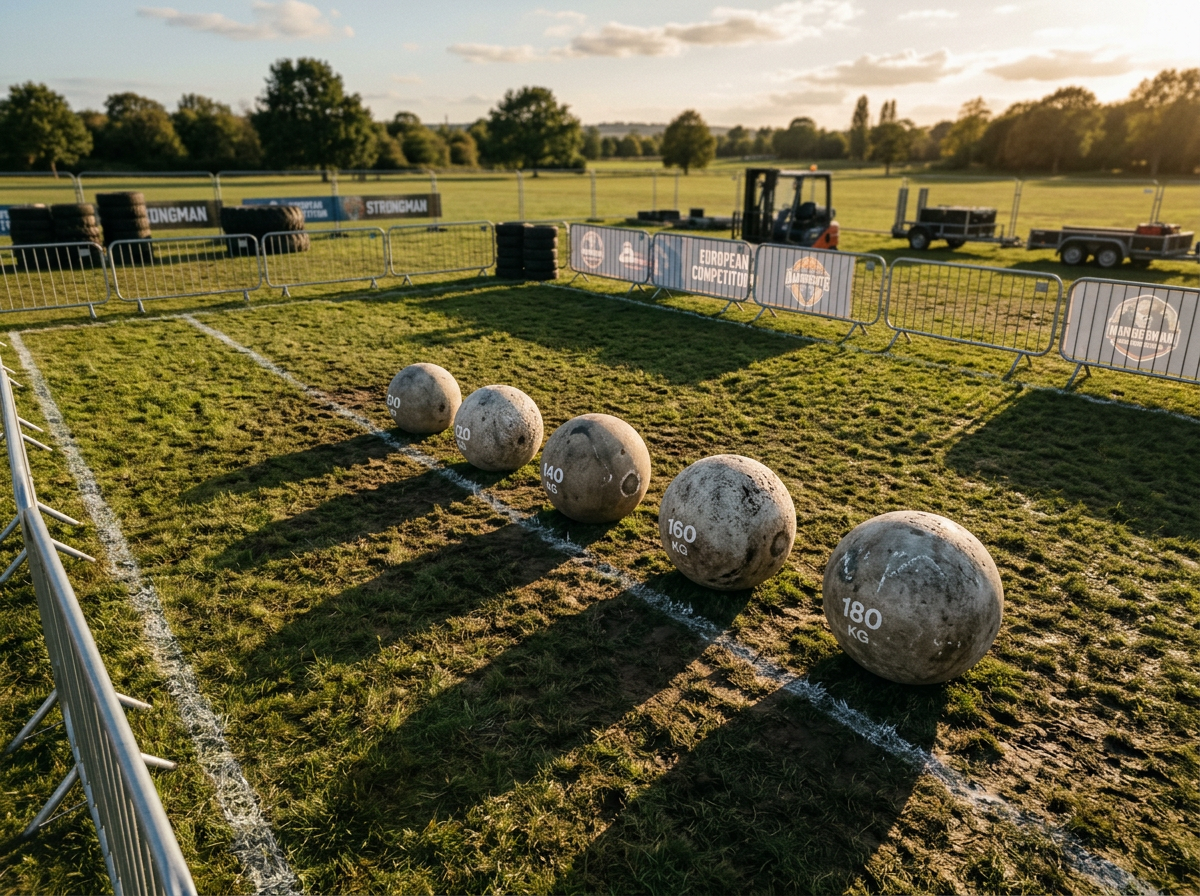
The 2025 WSM finals field was as competitive as the sport has ever produced. Nel's win with 47 points over Stoltman's 46.5 came down to the Atlas Stones — the final event, where Nel loaded four stones in 30.17 seconds to Stoltman's five stones in 31.76. On points, the totals were nearly identical, but Nel's consistency across all five events held. He won the opening Carry and Hoist, then fought through the 18-inch max deadlift (where Trey Mitchell hit an extraordinary 500 kg), the Hercules Hold, and a massive Flintstone Barbell Press before closing on the stones.
For Nick Best, watching Sacramento is a masterclass in event management. Nel didn't win by dominating any single lift. He won by never losing badly. That's peaking intelligence.
Event-Specific Work in the Final 4–6 Weeks
Best's peaking structure compresses event-specific implement work into the last four to six weeks before competition. Through most of a training cycle, the focus stays on general strength — squat pattern, press pattern, hip hinge, carry. The implements get loaded heavy, but the specificity is moderate. Then, as competition approaches, the program rotates. Yoke walks replace generic carry work. Farmer's walk implements come out specifically rather than trap bar variations. Log press takes the primary pressing slot.
At the same time, volume on accessory and general strength movements drops significantly. The goal is to arrive at competition day with the nervous system primed for exactly the movements that will be tested — not fatigued from a week of high-volume bodybuilding-style work, and not detrained from resting too aggressively. That balance, compressing specificity while managing volume, is where most amateur athletes go wrong: they either specialize too early and peak too soon, or they keep training generically until the week of the competition.
Deloads Are Scheduled, Not Reactive
One of the more counterintuitive aspects of Nick Best's preparation philosophy is that deload weeks are built into the calendar from the start — they aren't inserted when he feels tired. By the time an athlete feels overtrained, the systemic fatigue has already been accumulating for two or three weeks. Waiting to feel bad before pulling back is like waiting until you're dehydrated to start drinking water.
For Best, a deload week means dropping both volume and intensity by roughly 40 to 50 percent across the board. The sessions still happen — the pattern stays intact — but the loading is deliberately light. Movement quality is reinforced, the joints get a reprieve, and the nervous system consolidates adaptations that were building during the previous loading block. The subsequent week, when the training load climbs back up, produces performance that wouldn't have materialized without the recovery period.
Masters vs. Open Class: Where the Philosophy Diverges
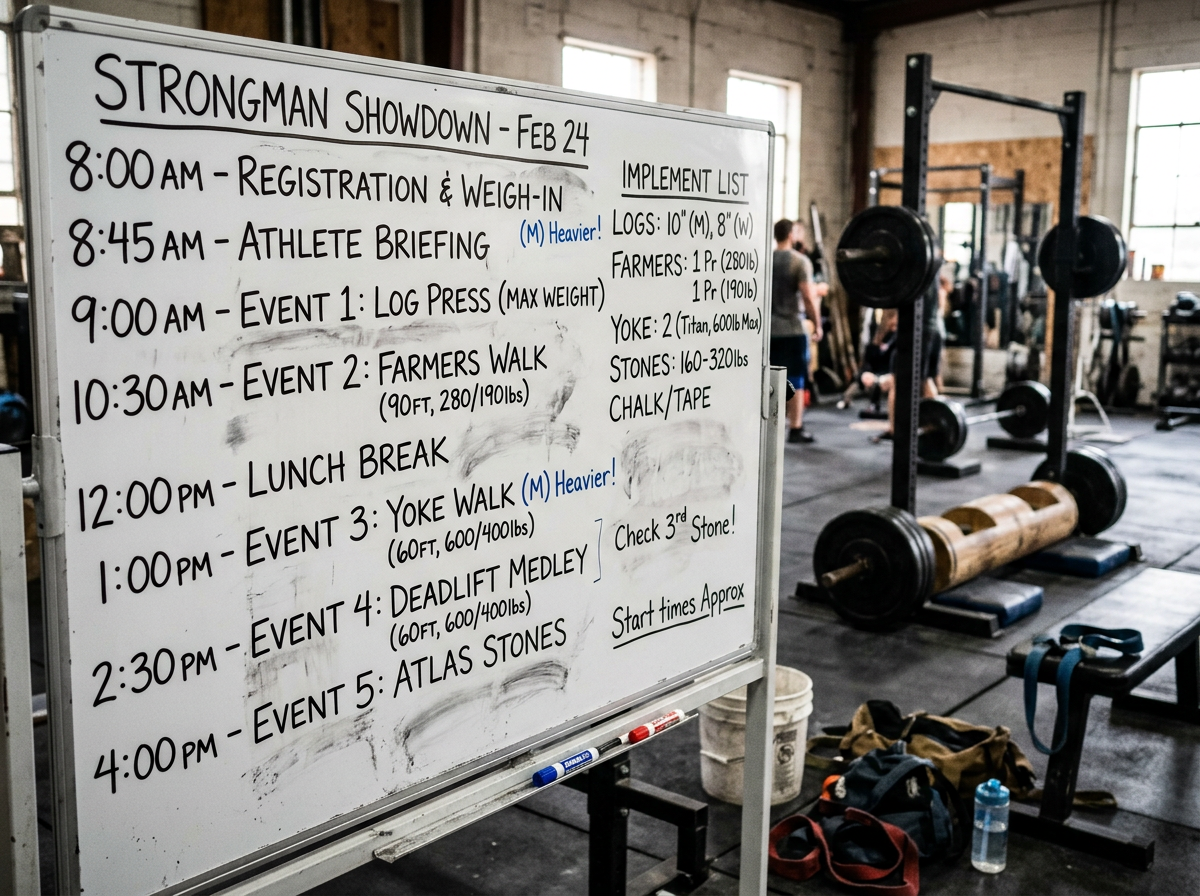
The open-class WSM field in 2025 featured men capable of pulling 500 kilograms off an 18-inch platform — Trey Mitchell hit exactly that. The absolute ceiling of strength output in open-class WSM has never been higher. For a Masters-class competitor like Nick Best, trying to compete at those absolute numbers isn't the point. The Masters strategy is built on durability: winning events where carry speed, event endurance, and technical efficiency provide an advantage over raw mass.
The farmer's walk world record — 47.3 seconds with 125 kg implements — illustrates this perfectly. That record isn't about being the strongest person on the field. It's about grip endurance, hip extension power, and the mental discipline to accelerate when lungs and legs are screaming to slow down. Those are qualities built over years of structured progressive overload, not qualities that peak at age 25 and decline.
For anyone prepping for their own competition — whether a regional qualifier or a Masters event — the WSM 2025 finals and Nick Best's breakdown of them on this week's episode are as useful as any programming guide. Watch how Nel managed his events. Then watch how Best explains it. The overlap is the lesson.
Watch the Full Episode
Nick Best Recaps WSM 2025 Finals – New Champion, Wild Lifts & Big Surprises! — from The Best Experience podcast with Nick Best.
Watch on YouTubeFurther Reading
Get the Full Best Experience
Train with Nick. Hear every episode early. Join the Best Strong Patreon.
Join Patreon